A financial guide for newcomers and new immigrants should do more than list products. It should explain what U.S. banks and card issuers usually ask for, how an application works, which fees change the real cost, and how a U.S. credit score is built after you arrive. This newcomer credit guide is written for people who already live in the United States or will arrive soon, including green card holders, workers, students, and family-based immigrants.

What this financial guide for newcomers covers
Use this page as the map. Each linked article goes deeper, but the same sequence applies to most households: identity and tax numbers, a U.S. bank account, one first credit card or other reporting account, then monitoring. Do not apply for several cards or loans in the same week just to “build credit faster.” Extra hard inquiries and unused accounts rarely help a thin file.
- First 90 days money checklist, including a first credit card checklist
- Credit cards for newcomers and new immigrants
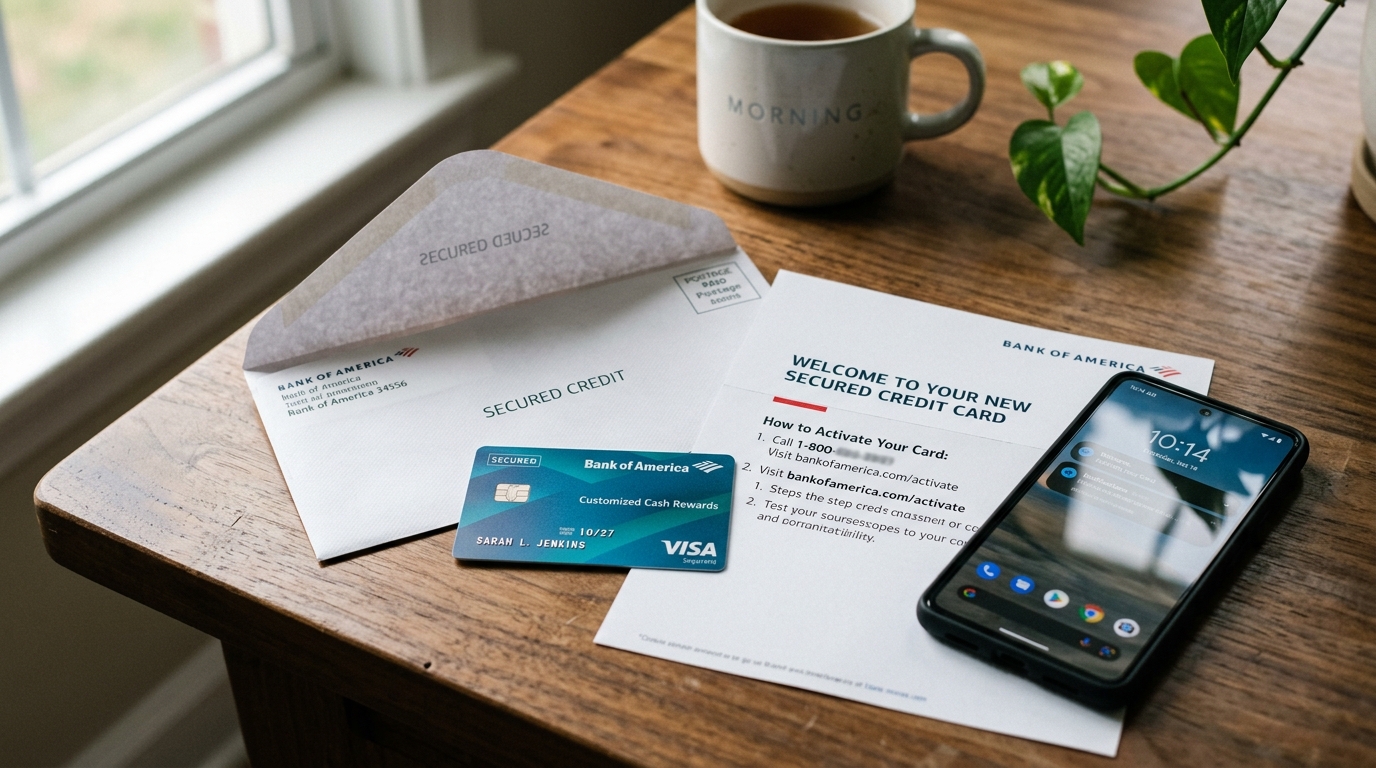
- Secured cards: deposit, fees, and graduation
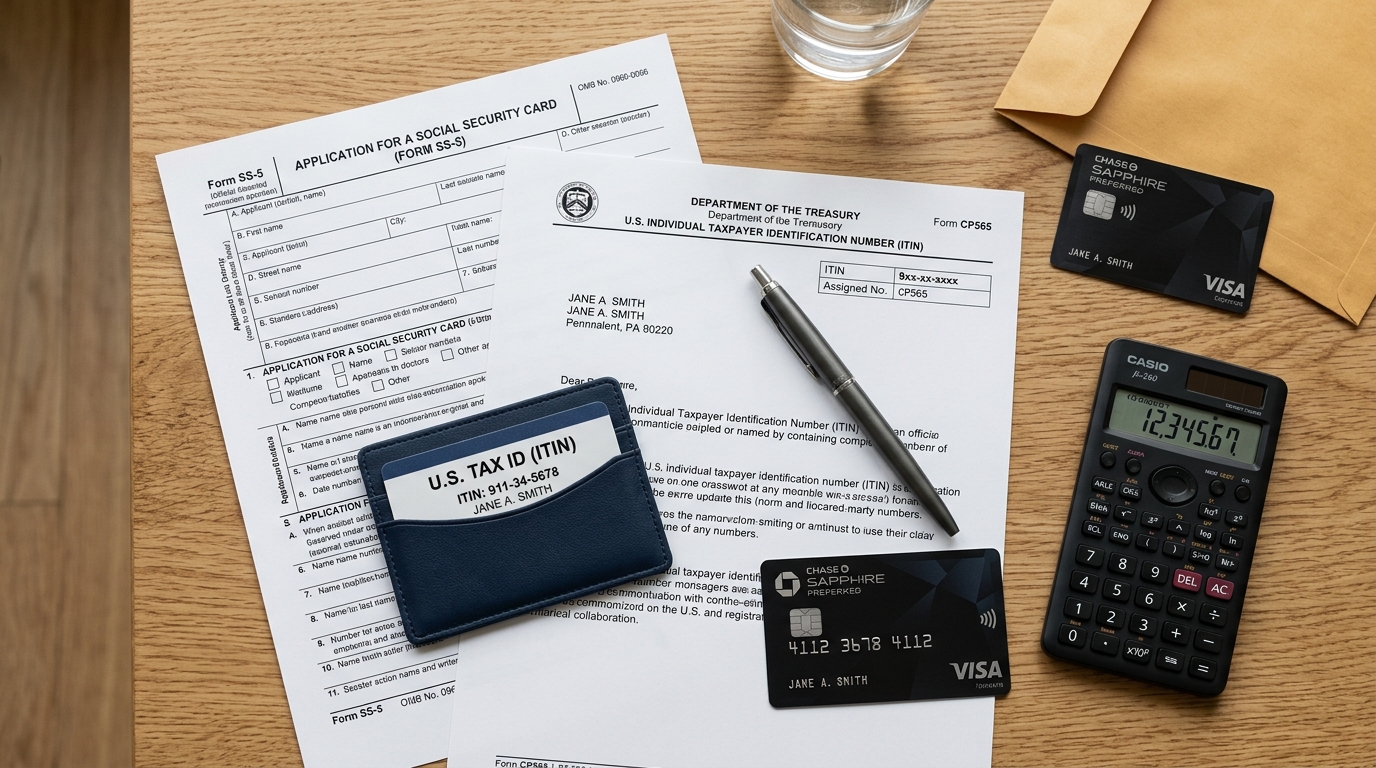
- ITIN vs. SSN for credit applications
- How a U.S. credit score is calculated and reported
- Opening a U.S. bank account
Newcomer credit guide requirements
Issuers set their own newcomer credit guide requirements. There is no single federal form that makes every bank accept every document. Before you apply, confirm the current list with the institution, not with an advertisement.
Identification and tax numbers
Many issuers ask for a Social Security number. Some accept an Individual Taxpayer Identification Number. A smaller group reviews an unexpired foreign passport, visa, I-20, or employment authorization in a branch. A green card (Form I-551) is proof of lawful permanent residence and usually comes with an SSN, but a thin or empty U.S. credit file can still lead to a secured or starter product.
Address, income, and a U.S. bank account
A physical U.S. residential address is commonly required. P.O. boxes and mail-drop addresses are often rejected. Issuers may also ask for employment or income evidence and for a U.S. checking account that can pay the bill. None of those items guarantees approval.
How to apply without creating extra problems
A financial guide for newcomers on how to apply should separate research from the application itself. Research can include reading the issuer’s eligibility page, checking whether a pre-qualification uses a soft inquiry, and listing fees. The application is the step that may trigger a hard inquiry.
- Collect the documents the issuer lists: identification, tax number if required, address proof, and income evidence.
- Open or confirm a U.S. bank account you can use for autopay.
- Read the annual fee, deposit, APR, foreign-transaction fee, and late fee on the official page.
- Ask whether checking eligibility is a soft or hard inquiry.
- Submit one application you understand. Wait for a decision before sending another.
- If approved, turn on alerts and autopay for at least the minimum, then pay the statement balance if you can.
Credit for Newcomers does not collect your SSN, ITIN, or bank login. Enter those only on the provider’s verified domain after you read its privacy notice.
Fees that change the cost of a first product
A financial guide for newcomers that ignores fees is incomplete. Compare the following on every card, loan, or bank account:
- Monthly maintenance or annual fees, and the balance needed to waive them
- Security deposits on secured cards and when they are returned
- Foreign-transaction fees if you still spend abroad or in another currency
- ATM, wire, and incoming-transfer fees on bank accounts
- Late fees, returned-payment fees, and penalty APRs
- Credit-builder or “program” fees that never come back as a deposit
A $0 annual-fee secured card with a refundable deposit is usually easier to evaluate than an unsecured card that charges monthly program fees. Verify the current schedule on the issuer’s site; marketing ranges are not a personal offer.
U.S. credit score guide for newcomers
A U.S. credit score is a number a model produces from a credit report. It is not a citizenship test and it is not transferred automatically from another country. Payment history, amounts owed, length of history, new credit, and mix of accounts can all matter, but a new file often has little data at first.
You generally cannot have a conventional FICO or VantageScore until at least one U.S. account is reporting. After that, one on-time card used lightly is more useful than several applications. Free official reports are available at AnnualCreditReport.com. Our credit score guide for newcomers explains what to check and how to dispute errors.
Green card holders and other lawful residents
Lawful permanent residents often have an SSN and can apply through the same online paths as other residents. The remaining issue is usually file age, not immigration category. If you arrived recently, treat this as a thin-file problem: one reporting account, low utilization, and time. See the homepage section on a newcomer credit guide for green card holders and the starter credit cards page for product types, not a promised score.
What this library will not do
We do not promise a 700 score, guaranteed approval, or a specific APR. We do not sell credit repair that claims to erase accurate negative information. Official CFPB and FTC materials remain the reference for consumer rights. Use the cards, checklists, and calculators below as planning tools, then confirm every number with the provider.