
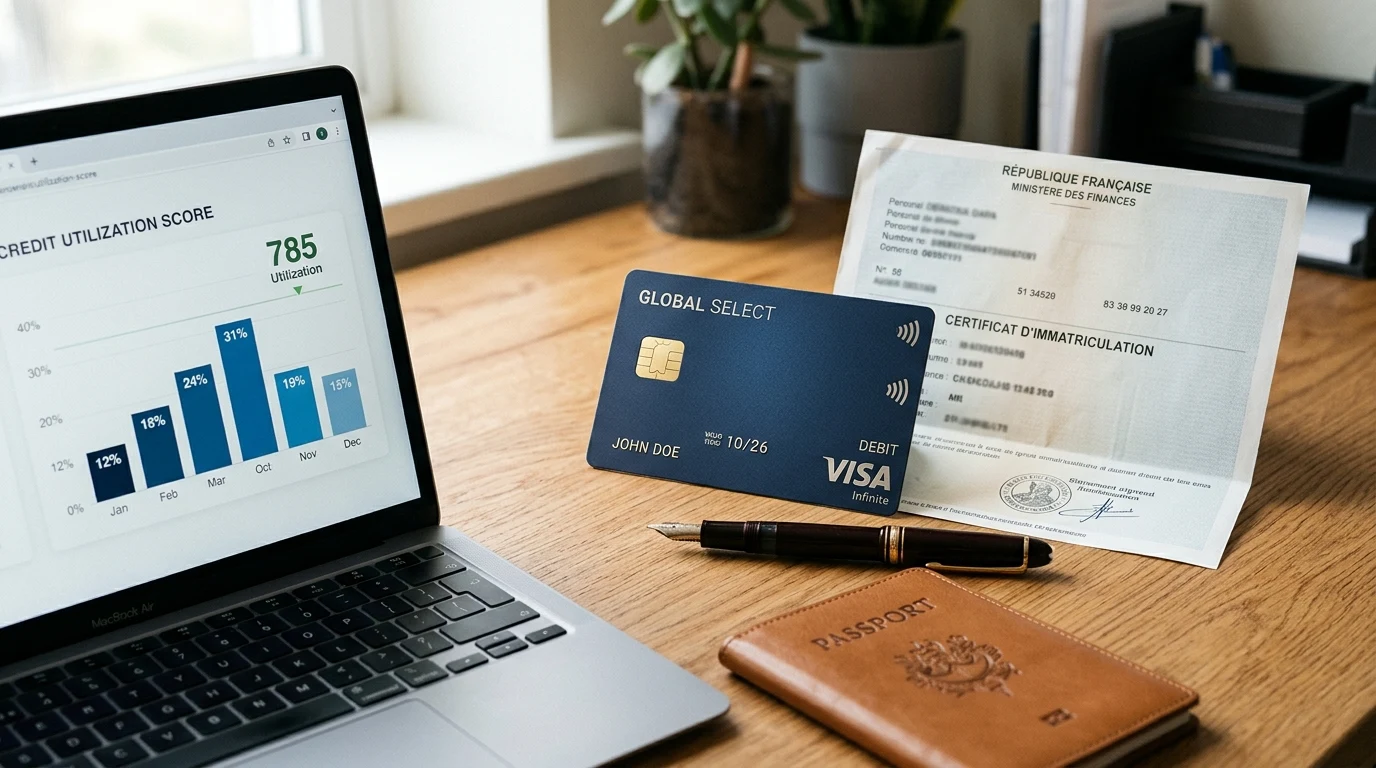
For millions of immigrants, visa holders, and non-resident taxpayers in the United States, building a domestic credit score begins with a nine-digit Individual Taxpayer Identification Number (ITIN, formatted 9XX-XX-XXXX) issued by the Internal Revenue Service rather than a Social Security Number. Because the Fair Credit Reporting Act (FCRA) and federal Customer Identification Program (CIP) rules under 31 CFR § 1020.220 allow U.S. banks to verify identity using an ITIN alongside a foreign passport or consular ID, an ITIN holder can establish a full tri-bureau credit file at Experian, Equifax, and TransUnion—starting with a refundable secured credit card.
Not every secured credit card marketed to newcomers is worth your cash collateral. Some subprime issuers charge $39 to $99 in upfront annual fees, fail to report monthly payments to all three credit bureaus, or hold your security deposit indefinitely without a path to an unsecured credit line. This 2026 audit evaluates the underwriting mechanics, deposit-to-limit ratios, graduation schedules, and bureau reporting protocols of U.S. secured credit cards that accept an ITIN and require no SSN. For a broader overview of starter products, see our best credit cards for newcomers without an SSN and our ITIN credit file fast-track walkthrough.
1. How Credit Bureaus Track ITIN Secured Card Tradelines
A common misconception among new arrivals is that an ITIN number itself has a credit score attached to it by the IRS. In reality, the IRS shares zero data with consumer credit bureaus. Instead, when a bank approves your secured credit card using your ITIN and reports your first monthly statement, Experian, Equifax, and TransUnion create a consumer credit file indexed by four demographic keys:
- Full Legal Name: Must match your IRS Notice CP565 and foreign passport character-for-character (avoid switching between one and two family names across different bank applications, which causes split bureau files).
- 9-Digit Taxpayer Identification Number: Stored in the bureau’s identification field using your 9XX-XX-XXXX ITIN until you later obtain an SSN and request a file merge.
- Current U.S. Residential Street Address: Verified via a utility bill, executed apartment lease, or U.S. bank statement (commercial mail receiving agencies and P.O. boxes frequently trigger CIP verification holds).
- Date of Birth: Used to distinguish family members sharing the same residential address.
Once your secured card reports active monthly statements for 6 consecutive billing cycles (approximately 180 days), FICO generates your first FICO Score 8 (ranging from 300 to 850), while VantageScore 3.0 and 4.0 models can generate a visible score after just 1 to 2 monthly reporting cycles.
2. 2026 Underwriting & Graduation Matrix: ITIN Secured Credit Cards
When auditing a secured credit card for an ITIN applicant, four quantitative metrics matter above all else: whether the card charges a $0 annual fee, the minimum refundable security deposit required to open a $200–$300 credit line, whether the issuer reports to all three major bureaus, and the exact month when automated account graduation reviews begin.
| Issuer & Secured Card Tier | Accepts ITIN (No SSN) | Minimum Deposit / Starting Limit | Annual Fee & Variable Purchase APR | Automated Graduation Review Window |
|---|---|---|---|---|
| Tier-1 National Partial-Deposit Secured Card | Yes (online or CP565 upload) | $49, $99, or $200 deposit for $200 limit (up to $1,000 max) | $0 annual fee; 29.74% variable APR | Starting at 6 months of on-time payments |
| Major Branch Bank Relationship Secured Card | Yes (in-branch with passport + ITIN/address proof) | $200 to $5,000 deposit (1:1 limit match) | $0 annual fee; 28.24% variable APR | Periodic review at 7 to 12 months |
| No-Credit-Check Cash-Flow Secured Card | Yes (ITIN or passport + linked U.S. bank account) | $200 to $3,000 deposit (1:1 limit match) | $0 to $39 annual fee; 19.99%–29.99% APR | 12+ months or manual account upgrade |
| CDFI Credit Union Share-Secured Visa | Yes (Juntos Avanzamos & local credit unions) | $250 to $2,500 pledged share savings | $0 annual fee; 11.99%–17.99% APR cap | 9 to 12 months (converts to signature Visa) |
Compare Verified Secured & Starter Credit Cards for Newcomers
Review refundable security deposit tiers, $0 annual fee options, and tri-bureau reporting rules for U.S. starter credit cards that welcome thin or new credit files.
Compare Secured & Starter Cards →3. The Mathematics of Credit Utilization on a $200 Secured Limit
Roughly 30% of your FICO Score (and up to 30% of your VantageScore) is determined by your revolving credit utilization ratio—the percentage of your total credit limit that appears as a balance on your monthly statement closing date. On a starter secured card with a $200 or $300 credit limit, everyday purchases can accidentally wreck your utilization ratio even if you pay the bill in full every month:
- Statement Closing Date vs. Payment Due Date: U.S. card issuers report your balance to Experian, Equifax, and TransUnion on your Statement Closing Date, which occurs 21 to 25 days before your Payment Due Date. If you spend $160 on groceries on a $200-limit card and wait until the due date to pay it off, the bank reports a 80% utilization ratio ($160 ÷ $200), which can depress your initial score by 45 to 70 points.
- The 1%–9% Pre-Statement Paydown Rule: To maximize your score every month, pay your current card balance down to between $4 and $15 (representing 2% to 7% utilization on a $200 limit) at least 3 business days before your statement closing date. Once the statement generates showing that small $10 balance, pay the remaining $10 before the due date so you never pay a cent of interest under the card’s grace period.
- Model Your Exact Ratio Before Applying for Loans: Use our interactive credit utilization calculator to see the exact dollar threshold for 9% and 29% utilization across one or multiple secured cards.
4. Four Predatory “Fee-Harvester” Traps ITIN Applicants Must Avoid
Under the federal Credit CARD Act of 2009 (15 U.S.C. § 1637(n)), mandatory first-year fees on a consumer credit card cannot exceed 25% of the initial credit limit. However, subprime issuers still target ITIN holders with four costly structural traps:
- Upfront Processing + Annual Fee Stacking: Avoid any card that charges a $75 to $95 first-year annual fee plus a $9.95 monthly “account maintenance fee” starting in Year 2. When major national banks and federal credit unions offer $0-annual-fee secured cards, paying $100+ per year for a $200 credit line is pure deadweight loss.
- Zero Grace Period on Purchases: Standard credit cards give you a 21-to-25-day interest-free grace period on new purchases if you paid your prior statement in full. A small subset of subprime cards begin accruing 29.99%–35.99% daily periodic interest on the exact day of purchase. Always verify that the Schumer Box states: “Your due date is at least 21 days after the close of each billing cycle. We will not charge you any interest on purchases if you pay your entire balance by the due date each month.”
- Single-Bureau Reporting: A card that reports only to one bureau leaves your credit file completely blank at the other two bureaus, causing automatic rejections when an auto lender or apartment landlord pulls a bureau that lacks your tradeline.
- Non-Graduating Deposit Locks: Some subprime secured cards never graduate to an unsecured line; the only way to recover your $200–$500 deposit is to permanently close the account, which shortens your Average Age of Accounts (15% of your FICO Score). Prioritize issuers that automatically review your account starting at Month 6 or Month 7 and refund your deposit via statement credit or ACH while keeping the same account age and card number active.
Compare starter credit cards →
5. Step-by-Step: Graduating From an ITIN Secured Card to Unsecured Credit
Follow this 6-to-9-month execution timeline to transform a single $200 secured deposit into a $2,000–$5,000 unsecured credit profile:
- Months 1–3 (Establish Clean CIP & Low Utilization): Open one $0-annual-fee secured card using your ITIN, IRS Notice CP565, foreign passport, and U.S. checking account. Put one recurring $10–$18 subscription on the card, pay it down before statement close if you use the card for daily spending, and enable AutoPay for the full statement balance.
- Month 4–6 (Verify Tri-Bureau File Generation): Pull your consumer credit disclosures or use a credit monitoring portal to confirm that your name, address, and on-time payment markers appear accurately without a split file.
- Month 7 (First Unsecured Card + Graduation Review): Once your sixth monthly statement posts to the bureaus and generates a 690–720+ FICO score, apply for an ITIN-friendly unsecured cashback card while your initial secured card enters its automated graduation review window.
Frequently Asked Questions
Can I open a U.S. secured credit card with an expired IRS Notice CP565?
Under the federal PATH Act, an ITIN expires if it has not been included on a U.S. federal income tax return at least once during the preceding three consecutive tax years. While the paper Notice CP565 letter itself does not print an expiration date, banks validate your ITIN status during compliance review. If your ITIN has lapsed from non-use, submit IRS Form W-7 to renew it before applying so your card account is not frozen during post-issuance KYC review.
How do I transfer my ITIN secured card history when I receive a Social Security Number?
When you obtain an SSN (for example, after receiving an Employment Authorization Document or permanent residency), call the customer service number on the back of your secured or graduated credit card and ask the issuer to update your primary Taxpayer Identification Number from your ITIN to your new SSN. Then send a written request to Experian, Equifax, and TransUnion attaching copies of your SSN card, IRS Notice CP565, passport, and utility bill so the bureaus merge your historical ITIN tradelines into your new SSN file without losing a single month of credit age.
Does putting down a $1,000 security deposit build credit faster than a $200 deposit?
Credit scoring algorithms treat a $200 credit limit and a $1,000 credit limit identically in terms of payment history weight (35% of FICO), provided both maintain the same percentage utilization ratio (such as 5%). However, a higher deposit ($500 to $1,000) makes it much easier to use the card for everyday expenses like gas and groceries without exceeding the 9% utilization threshold before your statement closing date.