
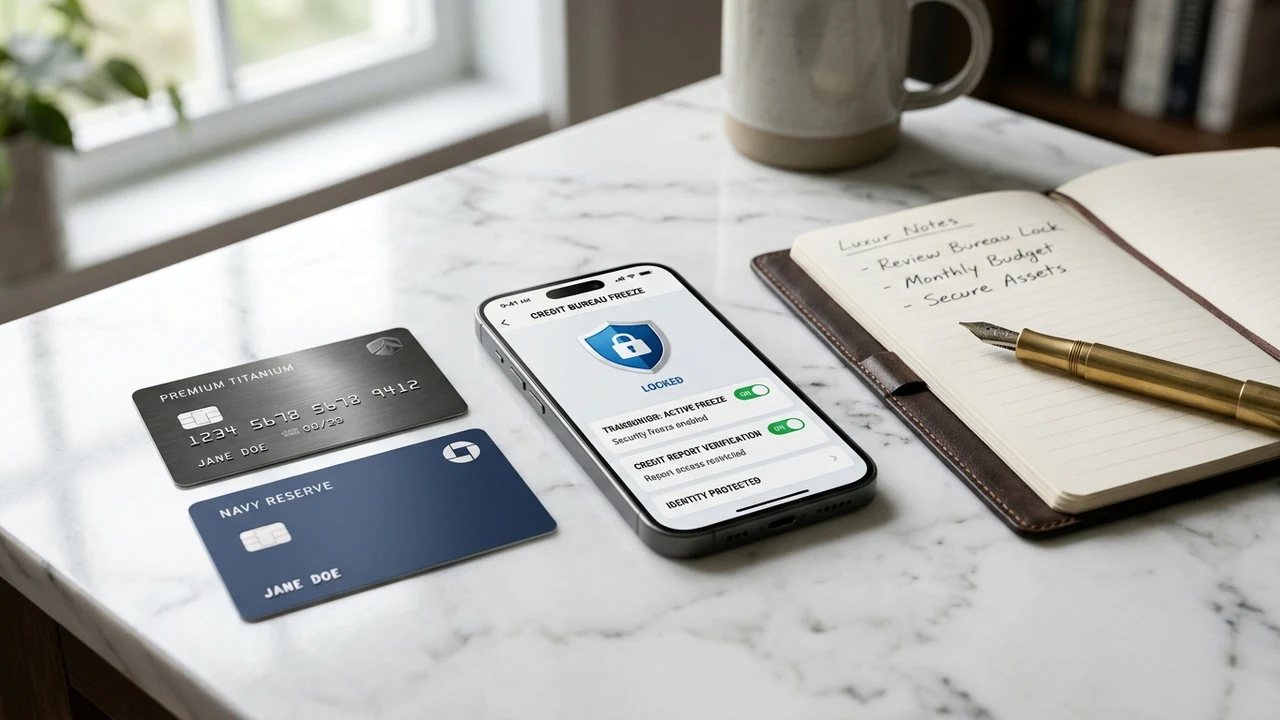
Short answer: Being added as an authorized user on a trusted relative’s U.S. credit card can put a positive account on your credit report within one or two billing cycles, if the issuer reports authorized users to the bureaus. A security freeze at Equifax, Experian and TransUnion is free by federal law, does not change your score, and does not stop that card from reporting. Use both: the card starts your file, the freeze stops strangers from opening new credit in your name.
Who this is for: newcomers with no U.S. credit file yet, family members willing to add them, and anyone with a new SSN or ITIN who wants to lock their file. Not a fit: paying a stranger or a broker to add you to their card.
What to do next
- Ask the relative’s card issuer two questions: does it report authorized users to all three bureaus, and does it need your SSN or ITIN to do so?
- After the account shows on your report, place a free freeze at each bureau and save the PINs or logins.
- When you are ready for a card in your own name, lift the freeze for a few days and compare starter cards first.
Ready for a card in your own name?
SuperMoney lists secured and starter credit card offers from several issuers. Many require an SSN, so check each card's ITIN rule before you apply. The issuer decides approval, limit and APR.
Compare starter credit cards →Partner link to SuperMoney, a comparison site. We may earn a commission. How we earn
1. How an authorized user account builds your file
When a primary cardholder adds you, the issuer issues a card in your name on their account. If the issuer reports authorized users, the account appears on your credit reports with its limit, balance and payment history. You are not legally responsible for the debt; the primary cardholder is. The CFPB describes authorized-user status as one way to start building credit, provided the issuer reports it.
Scoring models then read that account like any other line on your report:
- Payment history: on-time payments by the primary cardholder help you; a payment 30 or more days late can hurt you too.
- Utilization: if the card has a $10,000 limit and the statement shows $500, that is 5% utilization on your report. If it shows $2,500, that is 25%, and it counts against you as well.
- Account age: many issuers report the account’s original opening date, which can add years of history to a brand-new file. Practice varies, so ask.
FICO has said its scores, including FICO 8, continue to count legitimate authorized-user accounts while limiting the effect of rented “seasoned tradelines”. That is why buying a spot on a stranger’s card is a poor deal: you pay a broker, the scoring benefit may be discounted, and issuers can close accounts used this way.
2. What to ask the issuer before you are added
Issuer rules change and are not always published, so we no longer print a bank-by-bank grid we cannot confirm. Ask the primary cardholder to call or check the issuer’s site for these five points:
| Question | Why it matters |
|---|---|
| Do you report authorized users to Equifax, Experian and TransUnion? | If the issuer does not report, the card does nothing for your file. |
| Do you need my SSN or ITIN, or only name, date of birth and address? | A tax ID can help the bureaus match the account to you. Without one, matching relies on name, date of birth and address. |
| Is there a minimum age? | Some issuers set one; others leave it to the primary cardholder. |
| Which opening date will show on my report? | The original date can add history; the date you were added does not. |
| Can the primary set a spending limit on my card? | A low limit, or not carrying the card at all, keeps the arrangement low-risk for both of you. |
You do not need to use the card. Many families add a newcomer, keep the physical card at home, and let the primary cardholder’s on-time payments do the work.
3. Risks, and how to exit cleanly
Two things can go wrong. First, a high balance on the primary card shows up as high utilization on your report. Second, a 30-day late payment by the primary cardholder can appear on your file. If either happens, the primary cardholder can remove you, or you can ask the issuer to remove you. Then ask each bureau to delete the account from your report because you were an authorized user, not a borrower. Bureaus generally have 30 days to complete a dispute investigation, and up to 45 in some cases, so plan for about a month.
4. Security freeze vs. credit lock
A security freeze is a right under federal law. Since September 21, 2018, the three nationwide bureaus must place and lift freezes for free. A request made online or by phone must be placed within one business day, and a lift requested the same way must happen within one hour; mailed requests get three business days (CFPB). A freeze does not affect your credit score (FTC).
| Security freeze | Credit lock | |
|---|---|---|
| Cost | Free by law | Some are free, others come inside paid monitoring plans |
| Rules set by | Federal law (FCRA section 605A) | The bureau’s own contract terms |
| Lift speed | Within 1 hour for online or phone requests | Usually instant in the app |
| Score impact | None | None |
| Existing accounts | Keep reporting normally, including authorized-user cards | Keep reporting normally |
For most newcomers the free freeze is enough. If you think your identity has already been misused, add a fraud alert as well: an initial alert lasts one year, and an extended alert lasts seven years with an identity theft report.
5. How to freeze and temporarily lift all three bureaus
- Freeze each bureau separately. A freeze at one does not carry to the others. Use the bureaus’ own freeze pages, which the FTC links at IdentityTheft.gov.
- If you only have an ITIN: online freeze forms usually ask for an SSN. Call or write instead, and include copies of your ID, your IRS CP565 ITIN notice and proof of your U.S. address. Ask the bureau what it accepts before you mail anything.
- Save your logins or PINs. You will need them to lift the freeze later.
- Before any application, lift the right bureau. Ask the lender, landlord or phone carrier which bureau it uses; if they will not say, lift all three.
- Use a date range. All three bureaus let you lift a freeze temporarily for set dates, after which it returns on its own.
Check your reports for free while you do this. Equifax, Experian and TransUnion reports are available weekly at no cost through AnnualCreditReport.com. Our guide to getting a FICO score and monitoring credit without an SSN covers what to look for.
6. From authorized user to your own credit
Lenders tell an authorized-user account apart from accounts you owe yourself. A score built only on someone else’s card can help with apartment screening, but mortgage and auto underwriters usually want to see accounts in your own name. A simple order that works for many newcomers:
- Months 1-2: get added to a relative’s card with a long, clean history and low balances.
- Months 2-3: once the account appears on your reports, freeze all three bureaus.
- Months 3-6: lift the freeze for a few days and apply for one starter or secured card in your own name. Our ITIN vs SSN credit building guide lists which issuers accept an ITIN, and our Capital One Platinum Secured review covers one common first card.
- After approval: put one small bill on the card, pay the full statement automatically, and re-freeze.
Pitfalls to watch
- An issuer that does not report authorized users adds nothing to your file.
- The primary cardholder’s high balance or late payment lands on your report too.
- Forgetting to lift a freeze is a common reason an application is declined as “unable to access credit file”.
- ITIN holders may need to freeze by phone or mail, which is slower.
Frequently asked questions
Does adding me hurt the primary cardholder’s score?
No. Adding an authorized user does not cause a hard inquiry on the primary cardholder. Their score changes only if your spending raises the balance.
Can I be an authorized user without an SSN?
Often yes. Some issuers add authorized users with name, date of birth and address only. Reporting and matching work best when the issuer has your SSN or ITIN, so ask whether you can add it later.
Will a freeze stop my authorized-user card from building my score?
No. A freeze limits new creditors from viewing your file. Existing accounts, including authorized-user cards, keep reporting.
How long does a freeze last?
Until you remove it. Temporary lifts end on the date you choose.
Do I need to freeze if I have no credit file yet?
Ask each bureau how it handles a request when it has no file under your details. Many newcomers freeze right after the first account appears.